
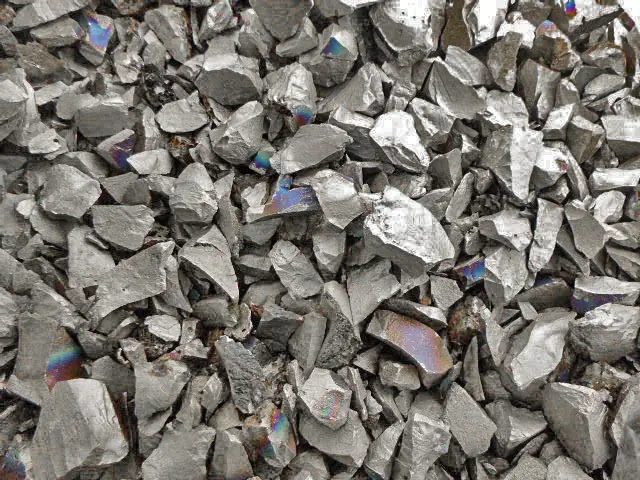
North-American ferro titanium closed December 2025 at $2.15–$2.30 per pound fob warehouse, a five-year low and roughly 25% below the 2025 opening assessment. Argus Media's 2026 viewpoint expects the bleed to continue: European stainless mills cut runs through Q3 and Q4 2025, the alloy stockists behind them are sitting on excess inventory, and the cheapest exit is westward into the US. Sellers writing North-American 2026 contracts have begun building in price floors in anticipation of further European-origin tonnage landing through Q1 and Q2.
ChemAnalyst's quarterly monitor for Q4 2025 reads the same way: prices declined 0.69% sequentially, with the Netherlands assessment down 13.06% versus Q3 on persistent European stainless weakness. Outside the EU–US axis, December 2025 prices in China rose 0.85% on short-term restocking from steel mills ahead of year-end production planning.
Short-cycle weakness, long-cycle health
The price softness is real and worth tracking. The structural demand picture is unchanged. About 65% of global ferro titanium consumption goes into stainless steel, with grades 316Ti, 321 and 444 representing the segments where titanium stabilisation is non-substitutable. Aerospace and automotive alloying usage has risen approximately 20% over the past several years (Business Research Insights). The global market is on a $308M (2025) to $441M (2032) trajectory at a 5.3% CAGR — a curve that one quarter of European stainless softness does not rewrite.
India sits in a different demand regime
Indian stainless steel output is on course to almost double, from USD 18.5 billion in 2025 to USD 33.8 billion by 2035 (Stainless Today). Consumption growth is running at 7–8% annually, pushed by metro systems, rail, airport modernisation, water infrastructure and the broader EV/automotive build-out (KnowledgeRidge industry analysis). India's broader steel capacity trajectory is 200 MT (FY25) to 300 MT (FY30), with the Government's Production Linked Incentive scheme for specialty steel explicitly directing the mix shift toward titanium-stabilised, aerospace-grade and defence-grade output.
That policy mix is materially different from the European demand environment driving today's overhang. Indian downstream is in capacity expansion, not contraction; the grades being added are the ones that consume the most ferro titanium per tonne of finished steel.
Where Ferro Titanium is actually applied
Three stainless-steel grade families absorb most of the FeTi we ship:
- Grade 321 (1.4541) — titanium-stabilised austenitic stainless used in jet-engine exhaust, refinery superheaters and high-temperature process piping. Titanium is added at roughly 5× the carbon content to bind C as TiC and prevent intergranular corrosion in service at 425–900 °C.
- Grade 444 (1.4521) — titanium- and niobium-stabilised ferritic stainless used in EV battery housings, automotive exhaust manifolds and hot-water cylinders. Titanium stabilisation is what allows ferritic chemistry to deliver austenitic-grade weld toughness.
- Grade 316Ti (1.4571) — titanium-stabilised austenitic used in chemical process plant, pulp&paper digesters and seawater handling where standard 316 would sensitise. Used at lower Ti additions than 321 but to the same end.
Outside stainless, FeTi is also used as a deoxidiser and grain refiner in carbon and HSLA steels for structural plate and pipeline applications. Aerospace ingot houses use BB-70 grade material as a primary titanium feedstock alongside sponge. The grade band we run as standard (BB-30 at 28–32% Ti, BB-40 at 38–42% Ti, BB-70 at 68–72% Ti) covers the practical span any steel mill or melt-shop needs.
Sourcing logic for 2026 buyers
The spot-chasing instinct in soft markets has hurt buyers in previous cycles. Stockist-origin tonnage at attractive fob prices is usually fine on day one and problematic on month nine, when a customer audit requires tighter Ti banding than what arrived, or when a non-standard size is needed quickly, or when an extended hold is required for inspection. The volume is there; the grade discipline often is not.
Tier-1 Indian producers hold 400–500 MT of titanium scrap as steady-state inventory and process 7,000+ MT per year through induction-furnace routes. That scale is what makes BB-30 / BB-40 / BB-70 routinely orderable as standard product rather than one-off pours, with batch-level Certificate of Analysis covering Ti, Al, Si, C, P, S and tramp elements. For 2026 supply planning, the more durable answer is to qualify a producer that can hold spec across rolling contracts — and use Argus / ChemAnalyst price feeds to negotiate the spot benchmark.